


 Cart
Cart
 sales@molnova.com



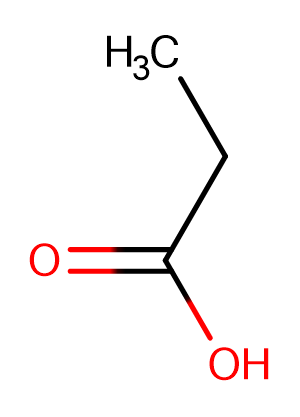
Propionic acid
CAS No. 79-09-4
Propionic acid( —— )
Catalog No. M19664 CAS No. 79-09-4
Propionic acid (PA) is widely used as an antifungal agent in food. It is present naturally at low levels in dairy products and occurs ubiquitously together with other short-chain fatty acids (SCFA) in the gastro-intestinal tract of humans and other mammals as an end-product of the microbial digestion of carbohydrates.
Purity : >98% (HPLC)
 COA
Datasheet
HNMR
HPLC
MSDS
Handing Instructions
COA
Datasheet
HNMR
HPLC
MSDS
Handing Instructions
| Size | Price / USD | Stock | Quantity |
| 100MG | Get Quote | Get Quote |


|
| 200MG | Get Quote | Get Quote |
|
| 500MG | Get Quote | Get Quote |
|
| 1G | Get Quote | Get Quote |
|
Biological Information
-
Product NamePropionic acid
-
NoteResearch use only, not for human use.
-
Brief DescriptionPropionic acid (PA) is widely used as an antifungal agent in food. It is present naturally at low levels in dairy products and occurs ubiquitously together with other short-chain fatty acids (SCFA) in the gastro-intestinal tract of humans and other mammals as an end-product of the microbial digestion of carbohydrates.
-
DescriptionPropionic acid (PA) is widely used as an antifungal agent in food. It is present naturally at low levels in dairy products and occurs ubiquitously together with other short-chain fatty acids (SCFA) in the gastro-intestinal tract of humans and other mammals as an end-product of the microbial digestion of carbohydrates. It has significant physiological activity in animals. PA is irritant but produces no acute systemic effects and has no demonstrable genotoxic potential.Propionic aciduria is one of the most frequent organic acidurias a disease that comprise many various disorders. The outcome of patients born with Propionic aciduria (genetic disorder) is poor intellectual development patterns with 60% having an IQ less than 75 and requiring special education. Successful liver and/or renal transplantations in a few patients have resulted in better quality of life but have not necessarily prevented neurological and various visceral complications. These results emphasize the need for permanent metabolic follow-up whatever the therapeutic strategy. Decreased early mortality less severe symptoms at diagnosis and more favorable short-term neurodevelopmental outcome were recorded in patients identified through expanded newborn screening.
-
In Vitro——
-
In Vivo——
-
Synonyms——
-
PathwayProteasome/Ubiquitin
-
TargetEndogenous Metabolite
-
RecptorEndogenous Metabolite
-
Research Area——
-
Indication——
Chemical Information
-
CAS Number79-09-4
-
Formula Weight74.08
-
Molecular FormulaC3H6O2
-
Purity>98% (HPLC)
-
SolubilityDMSO:10 mM
-
SMILESCCC(O)=O
-
Chemical NamePropanoic acid
Shipping & Storage Information
-
Storage(-20℃)
-
ShippingWith Ice Pack
-
Stability≥ 2 years
Reference
1.Chandler R J Aswani V Tsai M S et al. Propionyl-CoA and adenosylcobalamin metabolism in Caenorhabditis elegans: Evidence for a role of methylmalonyl-CoA epimerase in intermediary metabolism[J]. Molecular Genetics & Metabolism 2006 89(1-2):0-73.
molnova catalog



related products
-
5α-Cholestane
5α-Cholestane belongs to the class of organic compounds known as cholestane steroids.
-
Glucagon-Like Peptid...
Glucagon-like peptide 2 (GLP-2) is a recently identified intestinal epithelium-specific growth factor that has been shown to reduce the severity of inflammatory disorders of the intestine in rodent models. Currently Glucagon-Like Peptide 2 is used as a potential therapeutic agent for the human subjects with a broad variety of intestinal diseases characterized by intestinal damage and insufficiency.
-
2'-Deoxycytidine mon...
One of the principal nucleosides of DNA composed of cytosine and deoxyribose. A nucleoside consists of only a pentose sugar linked to a purine or pyrimidine base without a phosphate group.
